

Demonstration story. This text exists to test the blog’s layout and features. It does not represent the owner’s experience, biography, views or ratings.
Space before explanation
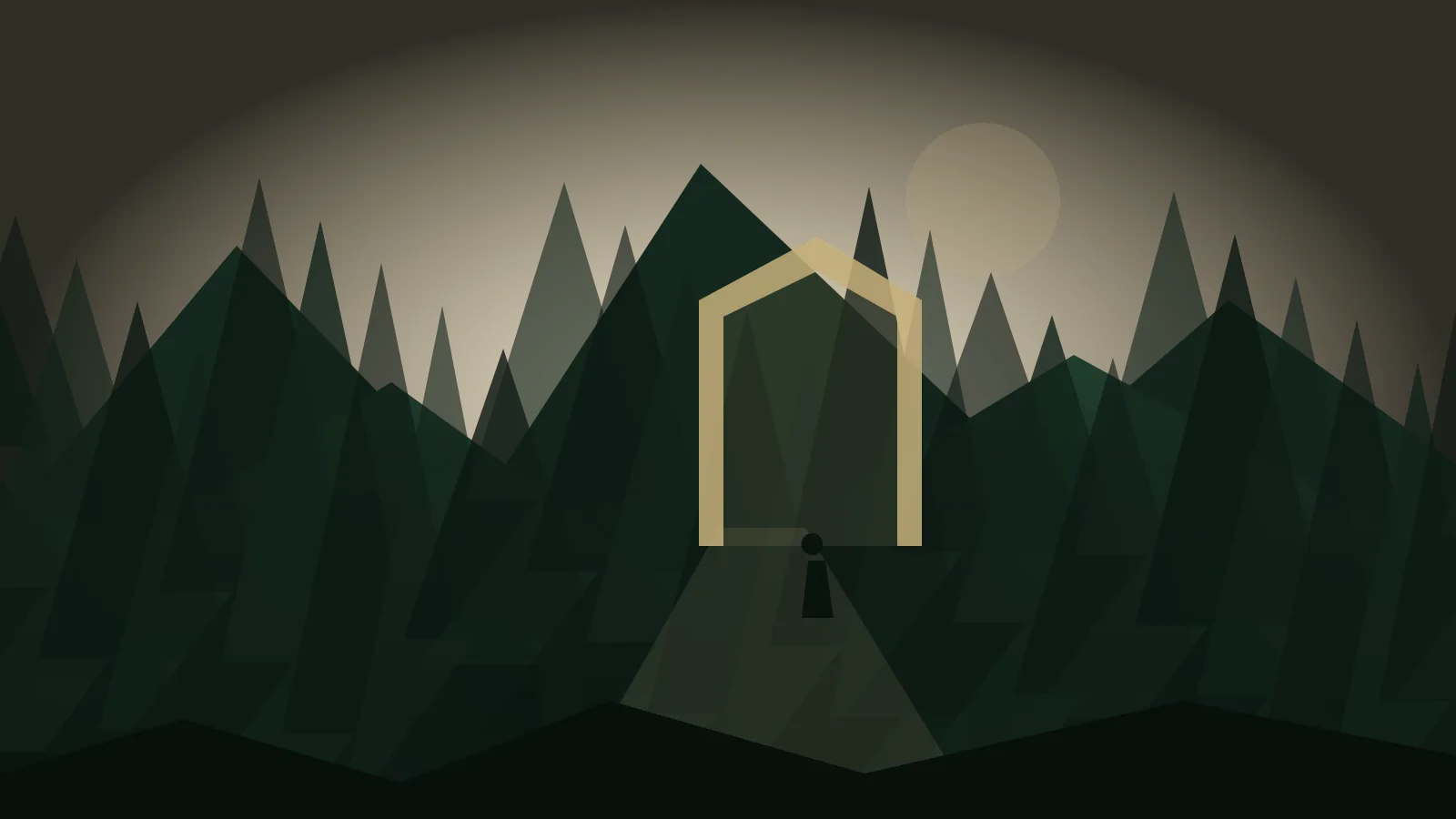
Imagine a small valley. A broken bridge is visible from the path, with a light shining on the far bank. There is no quest yet: the space itself suggests a direction. This is a hypothetical example, not a description of a particular game.
Clarity matters in this kind of world. A player needs to notice a detail and recognize the possibility of following it. A story begins in the gap between observation and action.
Curiosity and freedom
An open door is an invitation. A closed one can become a question. Yet that question only works when its answer feels coherent. Repeated shapes and sounds help communicate the rules of a place.
Freedom does not always require a huge map. A handful of meaningful routes can let players choose their pace and revisit familiar landmarks with a different understanding.
The rhythm of discovery
A quiet stretch after an intense scene creates room to look around. Attention shifts from the objective to the surroundings. Details that disappeared during movement can become visible.
The table below is a hypothetical illustration and also tests the readability of tabular information on small screens.
What remains after the credits
What stays with a player can be the route between events: an unexpectedly short turn, or a shelter from which the whole journey becomes visible for the first time. Small details can give a world its identity.
This is not a universal prescription. Before a real story is published, the author should choose a game, verify the observations and replace this demonstration with their own writing.
A useful question about a world can matter more than an immediate answer.
| Technique | Possible effect |
|---|---|
| Distant landmark | Directs attention |
| Quiet area | Creates room to observe |
- Notice a detail.
- Form a hypothesis.
- Test it through movement.
A note on this example
All situations here are hypothetical and demonstrate the publication layout.The invisible map
A game space exists in two forms. One appears on the screen; the other gradually assembles in memory. At first a player recalls isolated objects: a rock beside a turn, a staircase, a bright window. Connections emerge later. A route becomes familiar even when the interface offers no diagram. In this hypothetical world, that transition could matter more than acquiring another item.
When considering a route, it helps to ask what might anchor a memory. The answer need not involve size or colour. A distinctive sound, a change in the surface underfoot, or a brief shift in perspective can all become landmarks. A useful detail differs from its neighbours without promising more than the surrounding space can deliver.
A detail worth returning to
A first journey often concerns finding a safe route. Returning releases attention for other things. What initially looked like a corridor can reveal repaired walls, blocked openings or objects left in inconvenient places. These observations do not need to produce a single correct answer. They can simply support a plausible hypothesis about the place.
In our hypothetical valley, the bridge can be examined from another angle. That perspective reveals that its collapse did not merely interrupt the old road: it opened a passage beneath it. A different viewpoint changes the meaning of a familiar object. This is an invented example for discussion, not a statement about a particular game or the blog owner’s experience.
The cost of a hint
Every hint allocates attention. A bright marker can make an objective easy to find while reducing the chance of discovering something beside it. Removing every indicator can turn exploration into the repeated checking of identical doors. Between those extremes lie many possibilities: a sound from another room, a lit section of floor or moving branches against an otherwise motionless forest.
Two questions help assess a hint. Does it clarify the next possible action? Does it leave room for an independent decision? If both answers are yes, navigation may support clarity and curiosity together. The appropriate balance still depends on genre, difficulty and whether alternative signals are available to the player.
Accessible spaces
A signal that one player notices may be unavailable to another. Combining shape, contrast, sound and text offers more ways to understand a space. Distinguishing the correct route only through green colouring is insufficient. A difference in silhouette or position makes navigation less dependent on recognising a particular shade.
Accessibility options need not erase a creative intention. Additional indicators or reduced movement can let someone choose an interaction style that works for them. Within this example these remain topics for discussion, rather than a feature list for a real product. A published analysis should verify exactly what the game provides.
Questions after the walk
After exploring, try reconstructing the route without a map. Which locations come to mind first? Where did you want to take a detour? When did the direction become uncertain? These questions turn a broad impression into observations that another visit could test.
A real essay should add the game’s name, relevant play conditions, properly licensed screenshots and concrete scenes. This demonstration deliberately leaves those details open. Its purpose is to exercise a long article, anchored contents, a comfortable text column and search, without presenting invented experiences as the owner’s personal history.

Discussion
Commenting requires a GitHub account. Comments are moderated in GitHub Discussions.